Showing posts with label case studies. Show all posts

Monday, 10 February 2014

Art Tests

In order to get to grips more with the different art styles, I've been doing some studies of other artists work.


The pixel art study was the easiest and quickest study to complete.  It's quite a minimal piece so I mainly had to concentrate on the palette and where exactly each pixel should be placed.


This cel shading study was the second quickest to complete.  For the line art I made sure the pressure sensitivity was off as I was painting and made use of the lasso and fill tool on a layer underneath for colour.

The painterly study was definitely the most challenging of the lot.  Working in an artist's personal style was very difficult and I had to think very carefully about shape and colour.  I think I ended up going a bit overboard with my strokes and getting too absorbed in detail as the Bastion artwork is much more cleaner and smoother and also has a better grasp of tone.


The vector study was the second most challenging however this was largely due to being new to the software.  I've made silly mistakes here regarding details, gradients and the size of certain shapes however I think I successfully conveyed the form and personality of the creature and learned a lot whilst doing so.

Art Direction Research

I've been looking in to the different influences and inspiration for games in order to appreciate how outside influences may inform the art style of my own game idea.

Transistor (Super Giant Games, 2014)

The upcoming game Transistor has a distinct art nouveau feel to it whilst still maintaining a sci-fi genre.  The game's creative director Greg Kasavin stated on the topic of what influenced the art direction for the game:
"...we take sort of a melting-pot approach on our team, drawing from many different sources and media across all different aspects of the game...  we ended up with this romanticized, anachronistic-feeling city with some vintage qualities and some futuristic qualities as well. Jen Zee our art director took influence from the Art Nouveau movement of the early 20th century for aspects of the visual style, and we also looked to aspects of the late ’60s and ’70s when thinking about the game’s world."

A comparison of screenshots for the upcoming game Transistor (left) and the art nouveau style of Henri Privet-Livemont's posters (top right) and Gaudi's architecture (bottom left.)  
  
Interestingly the artists of 'The Skillful Huntsmen' (Design Studio Press, 2012) also encourage this approach of combining contrasting elements as  "by successfully mixing various genres, a designer can come up with a fresh and new aesthetic that nevertheless feels familiar and accessible." (Robertson, S. 2005)

DMC: Devil May Cry (Capcom, 2013)
A comparison between Taini's Devil May Cry flashback painting (left) and Caravaggio's "David with the Head of Goliath." (right)


Although a 3D game, DMC: Devil May Cry contained cut scenes depicting 2D painterly flashbacks of the main character Dante's childhood.  For these scenes 15 conceptual paintings were created by the game's art director Alessandro Taini, then animated by post production company The Mill.  Taini states "Most of the Painting are inspired by Caravaggio paintings but even William-Adolphe Bouguereau."  The Caravaggio influence is very much evident in the theatrical lighting and dramatic scenery and furthermore is undeniable in the imagery of Dante holding a slain demon's head, a clear homage to Caravaggio's "David with the Head of Goliath" (see above.)


A compilation of the sequences can be seen here:


Jazzpunk (Adult Swim Games, 2014)


The recently released Jazzpunk, developed by Necrophone Games and published by Adult Swim Games, is described as "James Bond meets Dada art."  Dada, an art movement that began as reaction to the horrors of World War 1 rejects reason and logic and prides itself on ridiculousness.  This concept fits hand in hand with the erratic, zany, comedy adventure gameplay of "Jazzpunk."
A comparison of the comedic ridiculous gameplay of Jazzpunk (left) and the surreal composition/use of primary colours in Francis Picabia's Amorous Parade.  (right)


Title Sequence for Jazzpunk (skip to 0:04:14)


Saul Bass' Title Sequence for Hitchcock's Psycho

Another interesting aspect of the art direction is the game's title sequence.  A colourful, minimal animated sequence that makes use of lively blocky shapes which can be likened to the work of Saul Bass.  

A comparison of Saul Bass' Vertigo poster to Jazzpunk, particularly its title sequence.
Finally, and perhaps most noticeably, is the game's art style itself.  Character models, for example, are simple blocky shapes similar to the symbols found on the doors of public toilets or boardgame pieces.  The game as a whole makes use of bright, blocky colours and thick comic-like black outlines - A simple but effective love letter to pop art style. 


A comparison of the character style in Jazzpunk to the work of Roy Lichtenstein.


Cuphead (StudioMDHR, unreleased)


Set to release in late 2014, the upcoming indie run and gun game Cuphead has been inspired by 1930s cartoon animation, particularly the work of Fleischer Studios (Betty Boop, Pop Eye.)  All aspects of gameplay emanate this vintage style, from the traditionally painted environments to the prim and proper typography.  The developers have even recreated a film grain effect and appear to have offset the RGB values of the images to create the effect of an old television screen.  The irony of using (breaking?) modern technology to create the outdated and damaged effects of older technology is definitely intriguing.


An image of Max Fleischer alongside a cut out of his creation Betty Boop.


Case Studies - Painterly Art

Bastion (2011)

Developer: Super Giant Games

Platform: PC, Mac, XBLA, iOS

Genre: Action RPG

Age Rating: 10+


Bastion is a fantasy action role playing game produced by indie developers Super Giants Games and published by Warner Bros. Interactive Entertainment.  The player controls "The Kid" as they fight their way through floating isometric environments whilst a narrator tells the game's story.


One of the major selling points of the game was the art style and the game sold more than 500, 000 copies in 2011.  In the same year it was nominated for the 2011 Independent Games Festival awards at the Game Developers Conference in the Excellence in Visual Art and Excellence in Audio categories.


Night in the Woods (Unreleased)

Developer: Infinite Fall

Platform:  PC/Mac

Genre:  Adventure/exploration

Age Rating: N/A


Night in the Woods is a currently unreleased  2D adventure and exploration game that was funded via Kickstarter.  The game is heavily story based and centers around the player character Mae who drops out of college and returns to her home time to find that the town has changed.


Another game that's selling point was the unique art style.  Though the style is not "painterly" int he traditional sense, it is an aesthetically pleasing merge of a smooth vector style and muted raster textures (though in retrospect this game is more one for the vector art category.)  The game currently has over 7000 backers on Kickstarter and was funded in less than 72 hours - Largely due to the unique and beautiful art direction.


Rayman Legends (2013)

Developer: Ubisoft Montpellier

Platform: PC, Xbox 360, Xbox One, Ps3, Ps Vita, Ps3, Wii U

Genre: Platformer

Age Rating:  7+


Rayman Legends is the fifth title in the series and sequel to Rayman Origins and up to four players can make there way through a range of visually stunning stages.


The game used the UbiArt Framework engine which is very "artist-friendly," allowing artists to drag and drop their artwork in to the game directly.  The time and budget allowed for the creation of many intricate, hand painted environments and the game is undeniably one of the most aesthetically appealing AAA games to date.


To conclude, painterly art styles are often used in games that aim to have the art style as a unique selling point.  It is the most versatile of all the styles and allows for a range of creative, stylised artwork that can appeal to any audience.  

Case Studies - Pixel Art


Hotline Miami

Developer:  Dennaton Games

Platform:  PC, PSN

Genre:  Action

Age Rating: 18+


Hotline Miami is a top-down action game developed by Dennaton Games, originally developed for PC then later ported to PS3 and PS Vita.  It is described as a surreal and extremely violent game with a resulting target audience of 18+.  With mature gameplay and a distinct 80's feel, the game is perhaps more geared towards the post-core gamer.  This makes the use of nostalgic pixel art an appropriate direction.


Scott Pilgrim Vs The World:  The Game 

Developer:  Ubisoft Montral.

Platform:  PSN, XBLA

Genre:  Beat 'Em Up

Age Rating: 12+


Scott Pilgrim The Game is a side scrolling beat 'em up based on the Scott Pilgrim graphic novels series by Bryan Lee O'Malley.  Up to four players can play at one time as one of the graphic novel's characters and each has their own individual move sets. 

Image from SCOTT PILGRIM THE GAME

The series itself, including the comics and film, is themed around "old school" video gaming and pays homage to several "vintage" games by means of parodying the likes of Mortal Kombat and Sonic The Hedgehog.  As a result of this theme, Scott Pilgrim The Game is another example of pixel art used in homage to early video games, appealing to the nostalgic gamer.

Image from SCOTT PILGRIM THE GAME


Fez 

Developer:  Polytron Corporation (2012)

Platform:  PC, XBLA, PSN

Genre:  Puzzle Platformer

Age Rating:  3+


The indie game Fez is a puzzle platformer and 2D game set in a 3D world.  The core mechanic involves shifting the 2D player-character around a series of 3D perspectives and all art, 2D and 3D, utilises pixel art.

Image from Fez

In spite of these changes in perspective, the pixel art work still fits visually.  This art style seems to work well as textures for blocks of geometric shapes and the developers would not have likely achieved the same smoothly transitioning effect 
had a different art style been applied.


To conclude, pixel art is often used in games that aim to evoke a feeling of nostalgia for the retro games of the 8-bit era and as result is often used to appeal to the post-core gamer.  It may also be used to add to gameplay and with an basic, relatively easy to learn style may also be used in indie development teams that lack artists (much like in the 8-bit era.)  

Monday, 2 December 2013

Case Studies - Vector Art

Farmville

Developer: Zynga

Platform: Facebook

Genre: Simulator/Social game/Casual

Age Rating: E


Farmville is a farming simulator social game for Facebook, developed by Zynga.  The player must manage a farm by means of plowing, planting, growing, harvesting crops and trees and raising live stock.


It's a freemium game and until May 2012 was the most popular game on Facebook.  The player can invite Facebook friends to become neighbours which allows them to interact with them in game via visiting each others farms and giving gifts and supplies.  The vector art style used feels, in my opinion, quite generic however, as the main audience appears to be casual gamers, perhaps this is simply an accessible art style that audiences will neither love or loathe? 


Candy Crush Saga

Developer: King

Platform:  Facebook, Android

Genre: Puzzle/Casual

Age Rating: E
Candy Crush Saga is a casual puzzle game for Facebook and Android devices, developed by King which is a variation of their browser game Candy Crush.  A "match three" type of puzzle game, players must swap different coloured candies either horizontally or vertically on a board in order to create sets of the two or three same coloured candies.  


Another freemium casual game, players must unlock or pay to access certain levels.  This game also uses vector art and has experienced explosive popularity with casual gamers.  Perhaps its success in the casual market was also partly due to its generic style?

Moshi Monsters

Developer:  Mind Candy

Platform: Online

Genre: Simulator/Puzzle

Age Rating: E (Target audience 6-14)


Moshi Monsters is a children's website where players can choose from six virtual pet monsters that they can name and nurture.  They can then travel around the online world of "Monstro City," chat to other users and play mini games in order to gain fictional currency to personalise their rooms.


It has a cute, colourful art style that is very appealing to children.  As the game's main appeal is the characters and visual experience, this art style may have been a large factor in its popularity (the game has over 80 million registered users.)


Outernauts

Developer:  Insomniac Games

Platform:  Facebook

Genre:  Social RPG

Age Rating:  3+


Outernauts is a social RPG developed by Insomniac Games (famous for the Spyro and Ratchet and Clank franchises) for Facebook.  Players must explore planets and capture alien creatures to battle with in a similar fashion, gameplay wise, to Pokemon.  


The art assets are a brilliant example of stylised vector graphics, with Dave Guertin and Greg Baldwin's styles shining through the artwork.  Interestingly, the developers wanted the game to attract both casual gamers and core gamers, however critics claimed the freemium "pay to win" mechanics would put core gamers off. (Davidson, P. 2012)


Shank

Developer:  Klei Entertainment

Platforms:  PC, XBLA, PSN

Genre:  Side scrolling beat em' up

Age Rating:  18+


Shank is a 2D side-scroller beat em' up by Klei Entertainment.  In this story based game, the player takes on the persona of Shank, an ex-hitman out for revenge for the murder of his girlfriend.


The animation was done in Flash and the art style took influence from cartoons, the golden age of comic books and graphic novels. (Cheng, J.  2010 quoted in Graft, K, 2010)  Perhaps the developers chose to utilise vector animation due to the general benefits of vector over raster graphics-  Vectors are made up of mathematics (as opposed to pixels) so they generally take up less file space than raster graphics and, for the same reason, they do not lose quality when scaled up or down.


To conclude, generic vector art is a style favoured by games targeting casual gamers as it is a safe and accessible art style.  Colourful, clean, simple shapes are also appealing to children.  Finally many artists prefer vector graphics to raster graphics as they take up less memory and there is no loss of quality when the vector image is re-sized.


Case Studies - Cel Shaded Games

Plants Vs Zombies
Developer:  PopCap Games


Genre:  Tower Defence


Platforms: PC, XBLA and iOS.
Age Rating:  E


Plants Vs Zombies is a tower defence game by PopCap Games where the player takes on the persona of a homeowner under the attack of an army of zombies and has to utilise a variety of plants in order to repel them.


Firstly its worth noting that, as far as I can tell, the art assets for this game were created using a mixture of both vector and cel shaded art.  The environments and menu screens all seem the be cel-shaded, with characters designed using vectors in a cel shaded like style.  The developers aimed for the art style to be a balance of “gritty” and “sickeningly cute.”  They aimed to target more experienced players by including strong strategic elements and more casual gamers by keeping the rest of the game relatively simple with few tutorials. (Thomson, M. 2010) 

Perhaps the art style has been used to reflect this – The friendly cel shaded art style mixed with the tongue-in-cheek goulish subject matter?


BattleBlock Theater
Developer:  The Behemoth

Genre:  Platformer

Platform: XBLA

Age Rating:  12 +


BattleBlock Theatre is a platformer game by The Behemoth developed for Xbox Live Arcade.  After the S.S. Friendship becomes shipwrecked, the entire crew, including the player, is taken captive by technologically advanced, highly intelligent cats and forced in to deadly theatre performances where the player must fight for survivor.  


The game is highly story based, with humour being a main selling point.  It is also a challenging game with a high diffiuclty level however it is worth noting that the bright colours and friendly, simple shapes alongside cut-scenes told in a puppet theater like fashion may be very appealing to children.  Furthermore, the game also includes a highly acclaimed co-op mode and several other modes of play such as the "Capture The Flag" based "Capture The Horse" and competitive trial run modes so there's "something for everyone."  (Carter, C.  2013)


Another game with a cartoony cel shade art style designed with a wide target audience in mind.


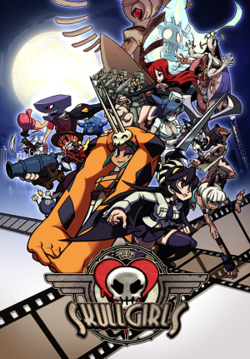
Skullgirls

Developer:  Reverge Labs/Lab Zero Games

Platforms:  PS3, Xbox 360, PC

Genre:  Fighting

Age Rating:  13+


Skullgirls is a 2D fighting game by Reverge Labs and co-published by Konami and Autumn Games.  It is set in a fictional world featuring 8 playable female characters fighting to obtain the "Skull Heart" which according to the game's lore has the ability to grant any woman's wish.


Whether you're in to the whole anime style or not, it's a beautiful game with some of the best game animation I've ever seen.  According to the fantastic video below on how the artists tackled animating the characters for this game, "each character animation is hand drawn and between 1200 to 1500 frames."  A crazy amount of time and effort was put in to this game animation and undoubtedly the same effect would not have been achieved if they'd used another art style such as pixel or vector art.


Although it's quite pixel art-like as the first game was released in 1994 by Capcom, the 2D fighting game Darkstalkers also helps illustrate this point as there is an evident cel shading style used in the character art and the animation portays brilliant use of Disney's acclaimed 12 principles.  (Lee, R. 2010)


To conclude, cel shading is often used in games designed to attract a varied audience which is likely due to the appealing child friendly cartoon style. It is also appears to be a style preferred by games that require complex animation as this style is less time consuming than a more painterly style, yet still allows for fluid animation.